Tuesday, January 27, 2015

Cavendish Laboratory Museum

by Jillian Pingel

Main Entrance
So for those who are unaware the Cavendish Laboratory is the department of physics at the University of Physics. At the time the Cavendish Laboratory was created, in the year 1874, there was a need for a place where the study of physics and experimental sciences could take place. However, The University of Cambridge was unable to provide sufficient funds for the necessities of Natural Sciences. Luckily, thanks to William Cavendish and his generous donation to the university, today stands the lab which is home to 29 Nobel Laureates and many other amazing accomplishments. 

Upon arrival to the Cavendish Laboratory I was unsure of what to expect. I had no idea of the history of the lab so I was surprised to find out about all the accomplishments and discoveries made there. Of everything I saw at the lab's museum the two things that interested me the most were the replica of the gas discharge tube with which J.J. Thomson discovered the electron and model of DNA made by Francis Watson and James Crick.

Replica of Thomson's gas discharge tube
In 1897 the electron was discovered by the third Cavendish professor of experimental physics, J.J. Thomson. Thomson was particularly interested in Cathode rays and the discharge of electricity through gases. In his experiment that led to the discovery of the electron Thomson used a discharge tube (left) and a pair of metal plates. One of the plates inside the tube was negatively charged and the other was positively charged and attracted cathode rays. When he passed the cathode rays through the electric field within the tube the rays moved toward the positively charged plate and he therefore concluded that the rays must be negatively charged. Other scientists had already established that the rays must be negatively charged. Thomson measured the charge to mass ratio of these particles and discovered that they have ~1800 times less mass than hydrogen, and therefore they must be a sub-atomic particle (now known as the electron).
Model of DNA made by Watson and Crick

DNA stands for deoxyribonucleic acid, which is a long chain of nucleotides held together by phosphate. The discovery of the structure of DNA is credited to James Watson and Francis Crick. At the time another pair of scientists were working at King's College in London, Maurice Wilkins and Rosalind Franklin. They were working with x-ray diffraction to study DNA. When Watson and Crick got their hands on their X-ray data they were able to deduce the correct structure. In 1953, Watson and Crick published their discovery that DNA must be in the shape of a double helix, with each helix held together by weak hydrogen bonds. Since these hydrogen bonds can easily break and reform, this suggested a means by which the genetic material can be duplicated. The structure of DNA impacted the world of molecular biology and to this day helps researchers make advances in science.

Going to the Cavendish lab and museum really opened up my eyes to the importance of science and everything it allows us to do. It's definitely a place to stop if you find the history of how things were discovered interesting.    


The Royal Observatory Greenwich

by Taimane Tuiasosopo

This particular Sunday was nice because we had a morning to sleep in.  Our day started like any other day, except for the fact that we had a quiz! (*GASP* SOMETHING ACADEMIC?! WHAT?! NO!)  However, we were all able to make it through our quiz on Longitude by Dava Sobel (SIDE NOTE: I recommend this book to everyone! [WARNING: slight obsession with clocks and astronomy are possible side effects.]) After that we hopped on a bus to Greenwich.  When we got there we enjoyed the scenery and happily hiked up the miniature mountain to finally set our eyes on the observatory itself.
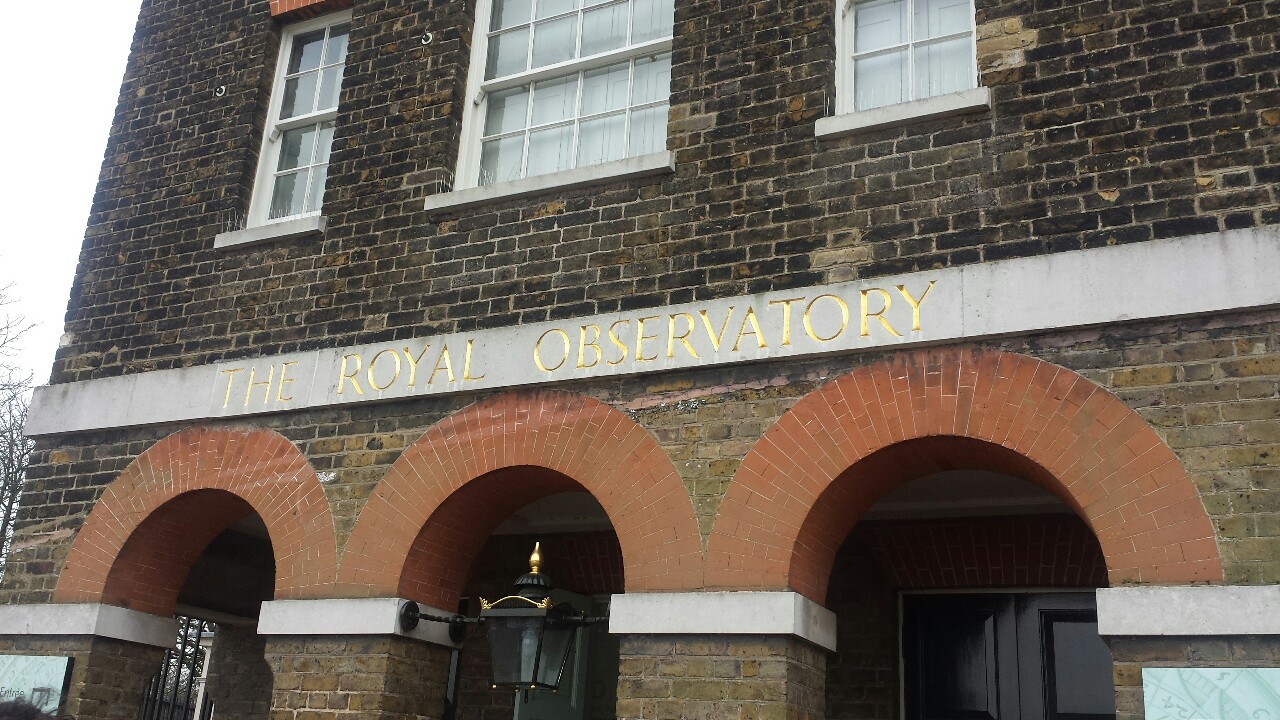
The front of the Royal Observatory Greenwich
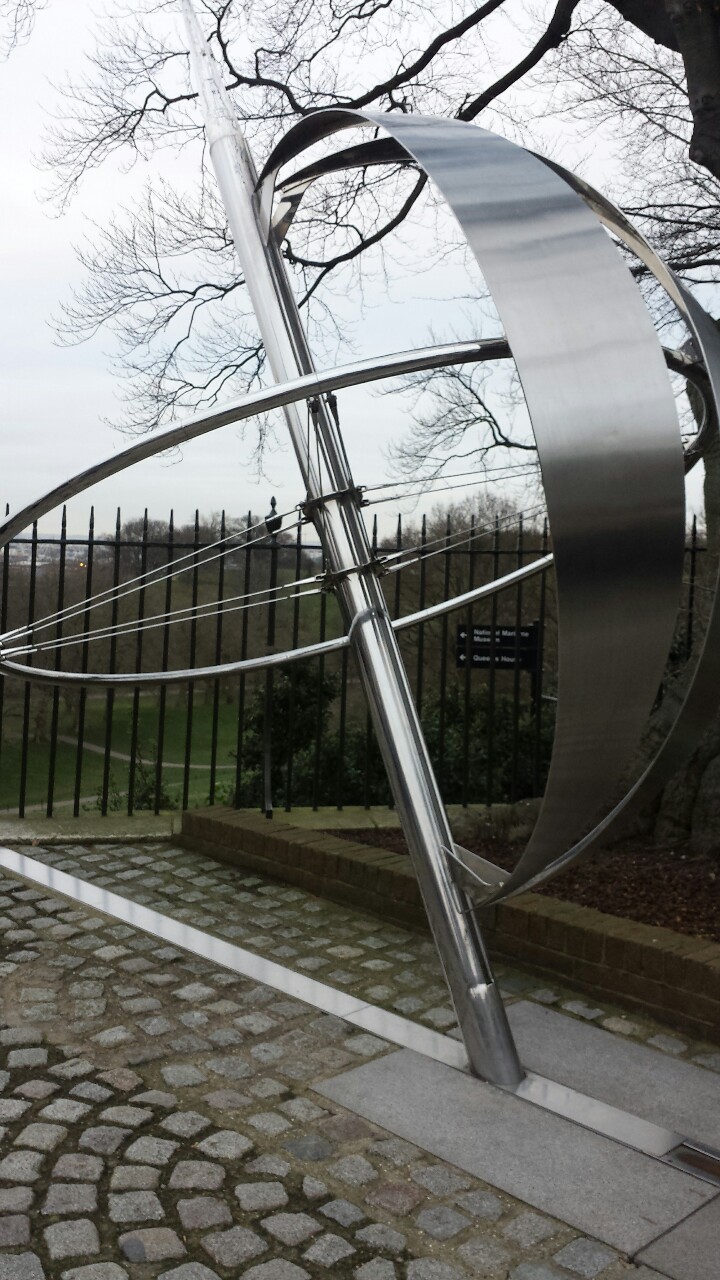
The Royal Observatory Greenwich was founded in 1675 by order of King Charles II.  It was originally established so that scientists and other academics could have a place to work on the mystery of finding longitude.  Traveling by sea at this time was quite dangerous as sailors had no way to determine their longitude at sea.  This requires knowledge of both the time at your current location (solar noon) and also the time back at home (which proved problematic.)  Early astronomers studied the sky for years making detailed astronomical measurements of the moon among the stars in hopes of discovering a kind of" celestial clock."  Eventually the problem was solved thanks to a mechanical clock made by carpenter and clockmaker John Harrison (more on him later.)  Today the observatory is the site of the Prime Meridian, this means that it sits at 0º longitude.  Visitors, like us, come from all over the world to stand on both sides of the Prime Meridian and claim they have stood in 2 hemispheres at once.

FUN FACTS (aka remember these for your next run on Jeopardy):
  1. The first Astronomer Royal was John Flamsteed.
  2. The current is Martin Rees.
  3. The Royal Observatory was designed by Christopher Wren who also designed St. Paul's Cathedral.
  4. While at his post as Astronomer Royal John Flamsteed (see #1) had some of his astronomical data stolen by Isaac Newton (and published without his consent!) 
  5. Pacific Standard Time (PST) is 8 hours behind Greenwich Mean Time (GMT.)

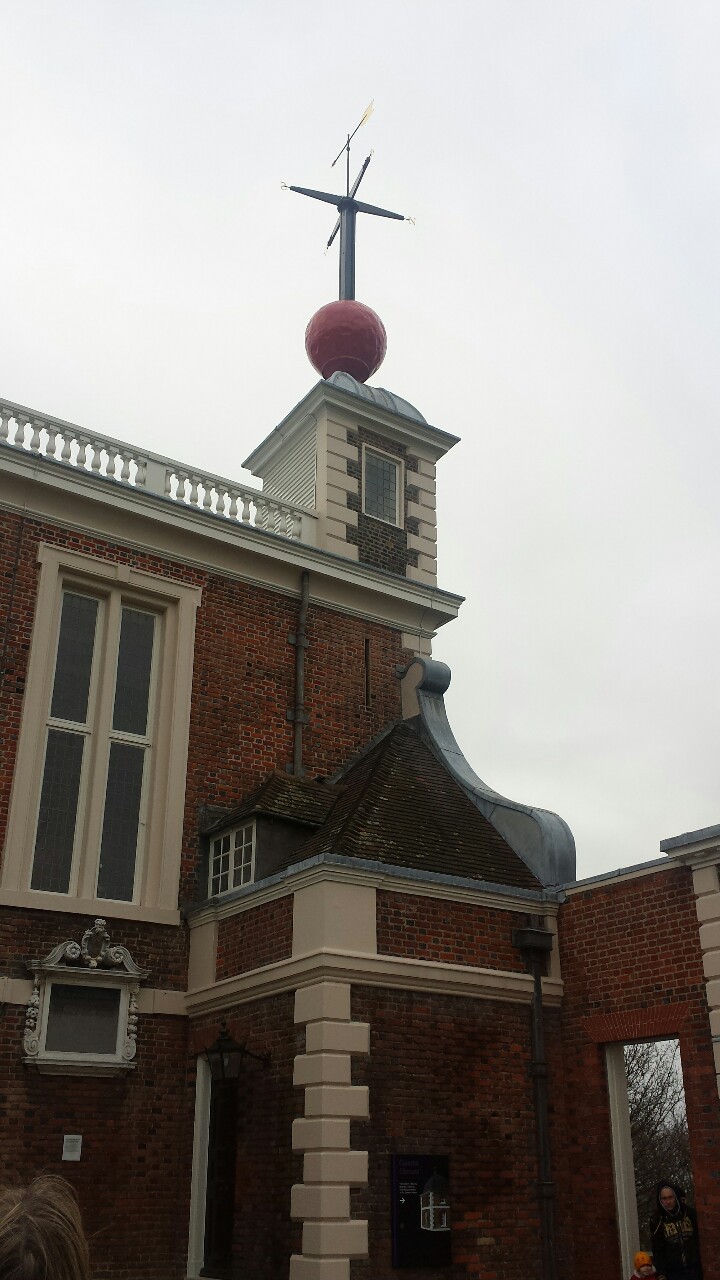
Time ball at the observatory which originally communicated the correct time to sailors on the Thames, and still drops every day at 1pm
Sculpture with the Prime Meridian running through it at 0º longitude


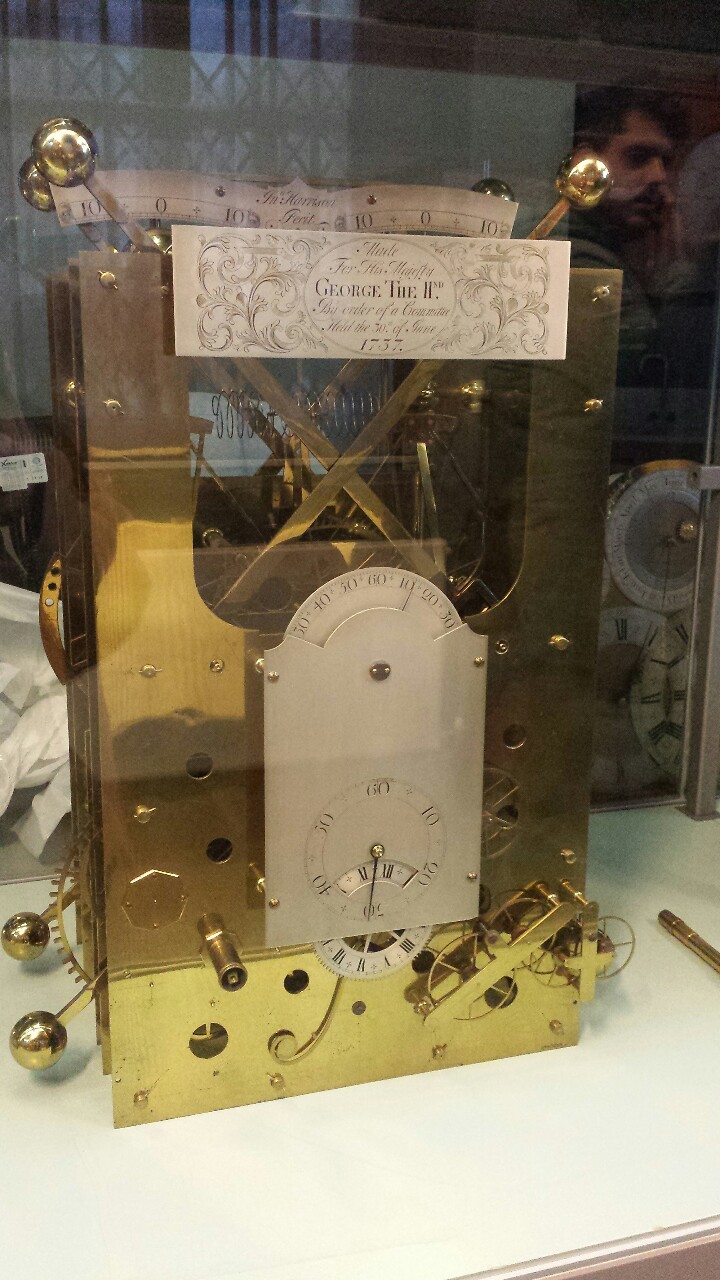
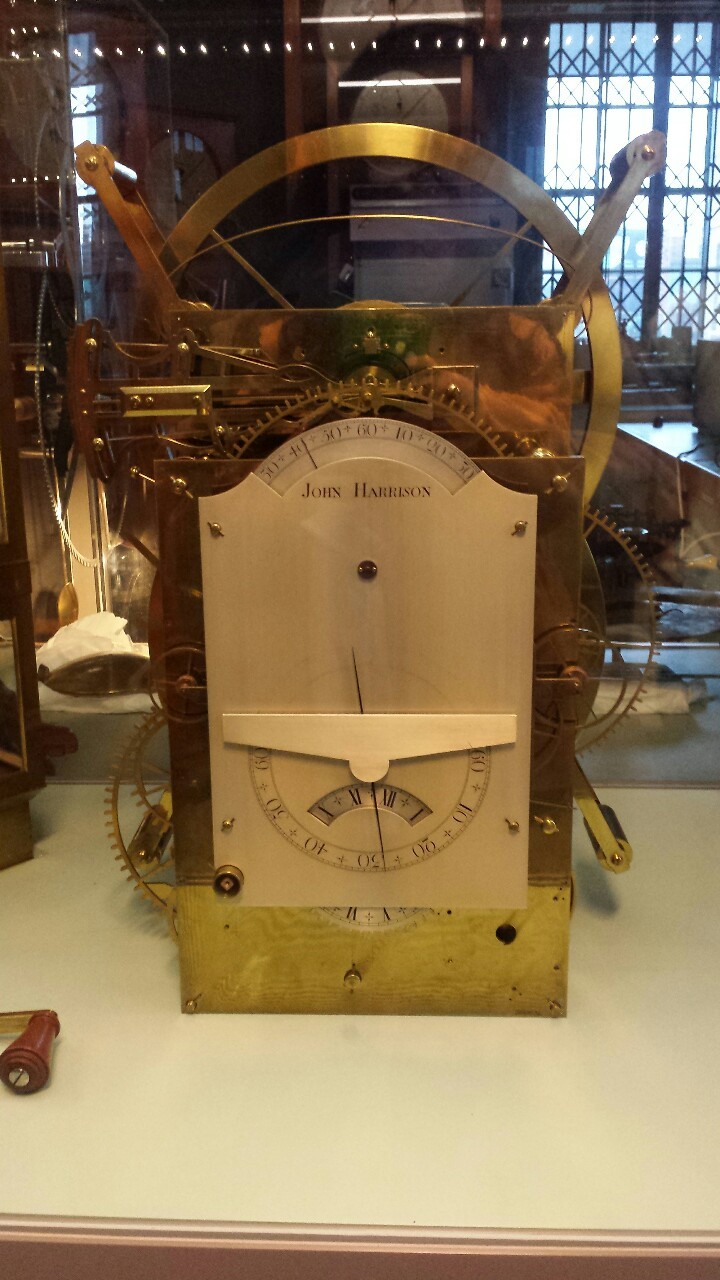
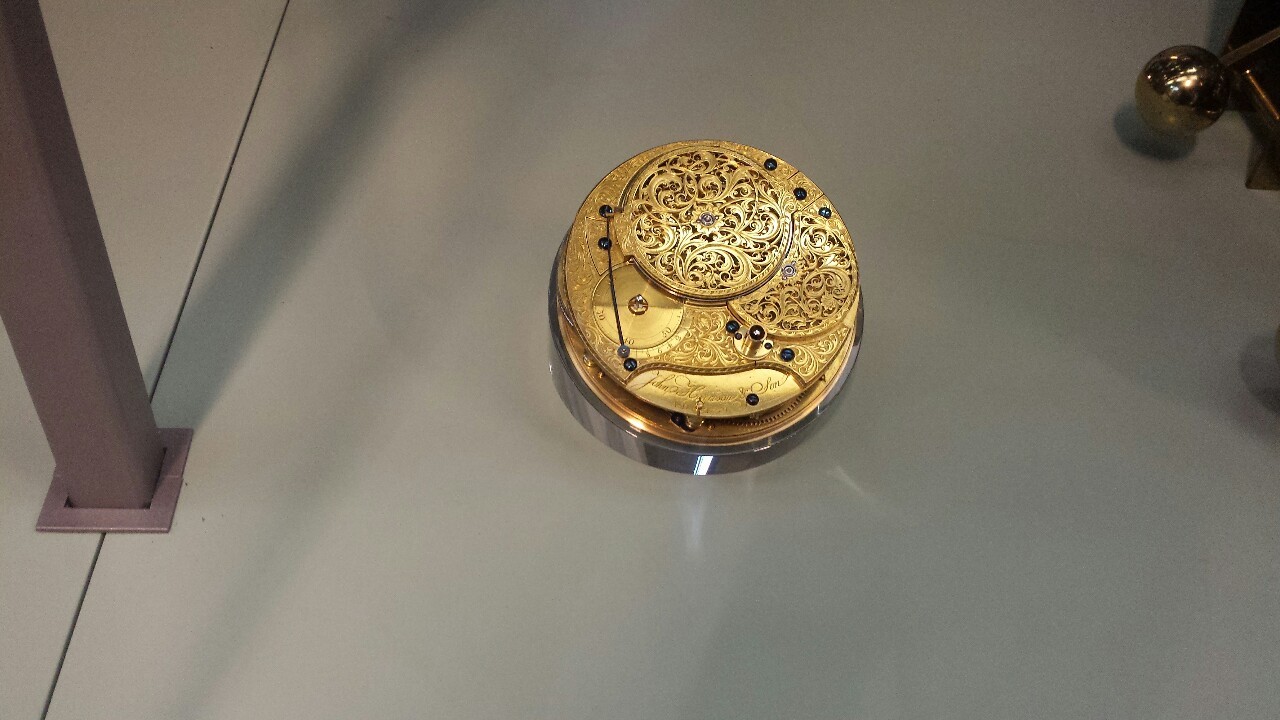
The highlight of my visit was seeing John Harrison's clocks.  With the help of Professor Lingwood, I found them tucked soundly in a room within a maritime exhibit.  As mentioned earlier, our class read Longitude and learned about Harrison's quest to make the perfect sea clock to aid sailors in their oceanic travels.  He toiled for years and years with the aid of grants to come up with a clock worthy of the £20,000 prize (more about the Longitude Act here.) He made 5 clocks during this time, he called them H-1 through H-5, four of which we got to see in person!  His fourth was the one that ultimately tipped the scales on discovering accurate longitude calculations.  After reading about all of Harrison's work it was almost unreal to see them in person.  Without further ado here are the pictures of them...  
John Harrison's first model titled H-1, weighing in at 75 pounds!
H-2 inscribed "Made for His Majesty George The IInd, By order of a Committee Held on 30th of June 1737."
H-3: which Harrison spent almost 2 decades working on.
The back of the prized H-4 inscribed "John Harrison & Son AD 1759."

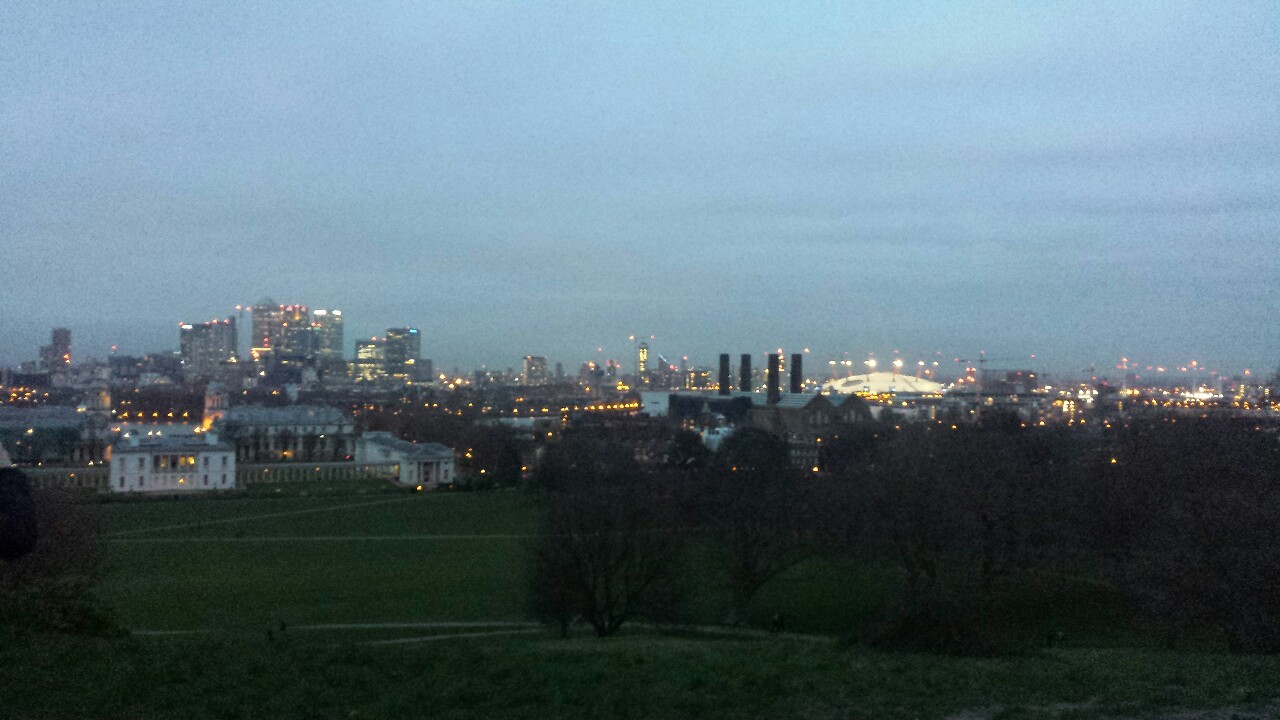
After the excitement of witnessing the clocks first-hand the class headed to the Planetarium.  We concluded our trip by watching a show here entitled "Dark Universe." We learned about dark matter, our universe, and the possibility of discovering farther places in the galaxy as science continues to advance. The show was relaxing and informative.  It was the perfect end to an exciting day in Greenwich.  I'll leave you all with our view while leaving the observatory.
View from the top of the hill at the Royal Observatory.

Cheers!

Tai :)

Monday, January 26, 2015

Royal Institution and Faraday Museum

by Daniel Farrell

Our class visited the Royal Institution January 21 to explore its contributions to the scientific community. The Royal Institution (or RI) was founded in 1799 by the leading British scientists of the time as a place to put into effect new ideas as well as teach science to the rest of the country. George Finch was elected the first president of the institution, and promptly used his influence with the crown to secure a Royal Charter in 1800, giving legitimacy to the organization. The Royal Institution soon became famous for its lectures on Chemistry. As it's reputation grew, great minds from all over began to flock to London to see the lectures and for an opportunity to use the materials and labs that were built at their headquarters. In the early years, much of the research involved isolation of previously discovered elements and discovery of new ones. Within 20 years of its founding members had isolated potassium, sodium, and calcium  and discovered many new elements including magnesium, boron, chlorine, and iodine. Surprisingly it wasn't till 1862 that research formally became a part of the mission of the RI. Through the rest of its history the RI has become famous for its Christmas Lectures as well as new discoveries that have changed the face of all branches of science like the existence of the electron, decay of atoms, nerve impulses, and uses of mature stem cells. 

Outside view of Royal Institution
Despite its regal reputation, the building itself seemed small and much less impressive than I expected. Upon entering we immediately went to the basement where the Faraday Museum is set up. Despite being only one hallway long, the museum is home to a plethora of world-changing experiments done by Faraday, for whom the museum is named, as well as many other influential members of the Royal Institution. After the class was able to tour the entirety of the museum, we all talked about the exhibits which interested us most. For me the most interesting parts of the museum were the experiments created by Faraday having to do with advancements in electromagnetism. 
Portrait of Faraday

Faraday is one of the most famous members of the RI.  His many discoveries helped helped the RI to emerge as a dominant player in the research community. He first came to the RI in 1813 as a research assistant, where promptly he and Davy were credited with inventing the first mining safety lamp that prevents explosions of flammable gases in the mines. In 1821 Faraday is credited, among other amazing discoveries, with building the first electromagnetic motor and generator, liquifying the first gas (chlorine), discovering Benzene, interpreting electromagnetism as a field, and inventing photography before his death in 1867. As Faraday showed his aptitude for research, he stepped up through the ranks of the RI. Faraday was first appointed Superintendent of the House in 1821, Director of the Laboratory in 1825, and finally in 1833 he was appointed as the first Fullerian Professor of Chemistry (A special research position created just for him that continues today). In 1973 in honor of his contributions to the RI, Queen Elizabeth II opened the Faraday Museum, which displays examples of many of his experiments, as well as experiments conducted by other members of the RI.
Main Hallway of Faraday Museum

Coiled wire around a ring which was used to first observe electromagnetic induction. The magenta coloring is due to the lighting in the display case. 

First Electric Generator created by Faraday

First ever sample of Benzene

While Faraday was one of the most well known researchers at RI, the society was home to countless world changing scientists such as:

John Tyndall, who explained why the sky is blue due to the low wavelength of blue light, causing it to be scattered more easily. Below is the tube which he used to demonstrate this effect.
John Tyndall's Blue Sky Apparatus

One of the most Important discoveries to come from the Royal Institution was the X-ray spectrometer, created by William Bragg. He used his spectrometer to observe the cell structure of crystals. Today this technique  has been improved over the years and used to discover molecular and atomic structures as well as make discoveries about electronic energy levels.

William Bragg's X-ray Spectrometer 


Sunday, January 25, 2015

Charles Darwin's House at Down


by Taylor Gida

Charles Darwin's House at Down
Charles Darwin is one of the most renowned  scientists to have ever lived. In most of today's classrooms, Darwin's Theory of Evolution is as important to the biological sciences as Isaac Newton's discoveries were to the understanding of Physics.While most of his field work was conducted on the HMS Beagle, it is at his home that Darwin did his most influential work.

The house was first and foremost home to Darwin, his wife and their many children. But it is also the birthplace of his great work The Origin of Species that gave the world its first in-depth explanation about the mechanisms for evolution by natural selection. Understanding the potential consequences of his ideas, he wanted an unassailable set of evidence for his theory. In the large garden area behind the house he performed an extensive number of experiments using plants and insects from around the world  Over the course of 20 years he worked on his manuscript, making the necessary intellectual leaps to make sense of his data.

When we first pulled up to the house at Down I saw that the house itself was a quaint two-story home that, although large to my eyes, was probably cozy if not small for a family boasting 10 children. As I began the self-guided tour of upper floor of the house, I was pleasantly surprised to see almost half of the floor was dedicated to the home life of the Darwin family as well as a number of interactive games and videos. This combination worked together create a fun and comfortable atmosphere that I'm sure kept the younger visitors (and many of the older ones as well) of this museum thoroughly entertained.

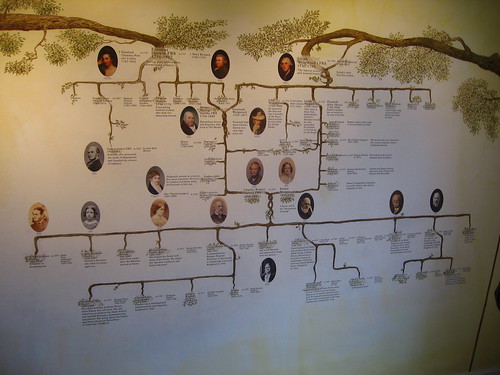
Darwin Family Tree
                   
Having studied Darwin and his work in several different classes, the rooms summarizing his research provided very little new information for me personally. Looking at his notebooks and a few of his preserved specimens was fascinating (especially the finches--his most famous example), but what really caught my attention was how much this site emphasized the impact Darwin's home life had on his work, most notably the death of his daughter Anne, which not only crushed his faith in Christianity, but also cemented his belief that life was a competition for survival rather than a strive towards harmony. The rooms that showed that he was a loving and supportive father to his children made him much more human to me than ever before, which is probably why I loved them so much.

Garden Path

It was also remarkable to be able to walk in Charles Darwin's footsteps during the audio tour of the garden. Once I broke through the barrier of unclear walking directions and was able to match locations to the stories I was listening to, it was easy to call up the images of Darwin puttering around the greenhouse or taking a stroll along the sandwalk with his children. While there are very few of Darwin's original specimens still preserved, and none of them in that greenhouse, I found that there was an atmosphere of scientific study infused within the space. Whether it was from the preserved nature of the house and its museum of Darwinian artefacts or the simple, natural state of the garden I can't say.


Inside the Greenhouse
I enjoyed the greenhouse the best--not only for the relief from the chill outside, but also for the rich variety of plant life that couldn't be found anywhere else in the garden. It certainly made me feel closer to the observations Darwin carried out there on climbing plants and carnivorous flowers.

Overall I found this site to be enjoyable, informative, and interactive. It is definitely a unique type of museum that is perfect for those people who prefer active, hands-on styles of learning. But it is also great for those who--like me--enjoy getting a glimpse at the man behind the science.
                                 
Sincerely,

Taylor Gida

Friday, January 23, 2015

Museum of London

by Anne Dinh

The Museum of London focuses on the history of London from its early beginnings to modern day. The exhibit begins with first settlements and continues on to Roman Britain, Medieval London, Renaissance, and into the 20th century. My two favorite parts of the museum were the early landscape of Britain as well as the Roman Britain period.


A view of the museum from its entrance. 

The landmass of Britain, located on the peninsula of Europe, was shaped by climate change and ice sheets. During the Anglian Ice Age 480,000 years ago, Britain was covered by ice. The weight of ice sheets changed the landscape and carved new valleys while ice dams changed the route of the Thames river. Before our trip the class discussed one possible explanation for the intermittent ice ages: Milankovitch cycles. This theory reasons that three components of Earth's orbital movement influence the climate. These components are eccentricity (elliptical shape of Earth's orbit), axial tilt (the angle between Earth's rotational axis and orbital axis), and precession (the orientation of the rotational axis). These aspects of the earth's orbit change in cycles on the order of 100,000 years, and cause changes in the amount of solar radiation reaching Earth.


Temperature variations over the last 500,000 years

By 8500 BC, a warming climate allowed the ice to melt and gave rise to forests. The landscape was then heavily shaped by highly adaptable human communities. As the land became habitable, people settled in the land and coped with rising water levels by building wooden trackways across the marshy valley floor. Between 1500 and 700 BC, the areas near the Thames Valley were used for raising livestock and agriculture.

The museum continues the history of London with the rule of Romans over Britain. Around 50 AD, the Roman Empire established Londinium, which is modern day London. By 100 AD, this city grew into one of the largest cities in the Western Roman Empire with a population of 60,000. Roman rule influenced the layout of the city and the way of life. In 150 AD, the civic center was established with the forum and basilica as the focal point. The offices and shops nearby were built with stone rather than timber or mud-brick, and water-pipes were laid down. I really enjoyed the Londinium exhibit because it gave me a sense of the millions of incremental changes in the structure of the city and the way of life. 


This is a model of London's civic center in 150 AD with shops, offices, and houses around the central courtyard. 

This museum allowed us to appreciate London's immense history beyond the beautiful ancient architecture. Thus far, we've seen stunning cathedrals and grand towers. A peek back to the beginning of this country and its development through the centuries only serves to strengthen my love of this city. This understanding of early London also allows us to grasp the impact of scientific discoveries and how our perspective of the world around us has gradually changed.

British Library

by Anisha Nigam

        The British Library was founded in 1753 and is home to many historical texts of the Western Civilization that can be found no where else in the world. The British Library consists of close to 200 million research texts and is a place where many people go to do in depth research. This was my second visit to the British Library and I am glad I was able to do a blog entry on this particular place. At first, I wanted to look at the Beatles work which mainly consisted of lyrics, many of which had originally been written on a napkin. I also quickly skimmed through the religion section which included Buddhism, Hinduism, Islam, and Judaism.  With that said, I moved my focus towards the sciences, which included Galileo Galilei, Anne Mclaren, and Willaim Henry Fox Talbot.
        I came across The Starry Messenger by Galileo Galilei (1564-1642), which we had read parts of in seminar classes and our current class that we are taking. His text was filled with his astronomical observations that he made with one of the first telescopes. We also have discussed many of the observations and discoveries of Galileo in our History of Science class. The text is also referred to as Sidereal Messenger that was published in New Latin in March 1610. With his telescope, he discovered that the moon had rough surfaces (contradicting the classical model, which was the belief that all astronomical surfaces were smooth) and discovered hundreds of stars that were never able to be seen from the naked eye.

Sidereus Nuncius (The Starry Messenger) by Galileo Galilei
        Another interesting text I came across was research done by an English woman named Anne Mclaren (1927-2007) which involved embryo transfers in mice (gene activity of mice is similar to those of humans), which made mice a good way to test for what would work on humans. She was made an officer of the Royal Society after her work in developmental biology lead to human in vitro fertilization.
        Another person who caught my attention was William Henry Fox Talbot (1800-1877). Talbot came up with the first way of using a process known as calotype which were photographic process. His invention of the calotype process has made current day photography available and he was more noted as contributing towards the artistic field.

This is a picture of the first printing press of Johannes Gutenberg, the books in the back were a separate part of the library

Cambridge Walking Tour

by Leslie Montano


Once upon a time a group of students took a 10 hour flight to London and started their adventures a week ago. A week ago! Time flies when you're having fun! 


Thursday, January 22, 2015... It starts off like any other day: Get up, get ready, eat breakfast & sign a paper to get money (per diem), but today was different. Today, we arrived at King's Cross Station and took a 50min train ride to CAMBRIDGE. It was like a Harry Potter scene! Except half the people were still asleep...Regardless, we finally made it to Cambridge where we got a lovely tour about the University and its many accomplishments. Pretty cool eh?

First of all this University is nothing but beauty. But besides the breathtaking sites, some pretty amazing people attended and/or performed research there. Because this course focuses on the history of Science I thought it would interesting to mention some of those people who have made a major impact. Some of those people included: Charles Darwin, Ernest Rutherford, J. J Thompson, Francis Crick, James Watson, Sir Isaac Newton, and James Clerk Maxwell. (collage below in no particular order)


Clockwise from top left: Charles Darwin, Ernest Rutherford, J. J Thompson, Francis Crick and James Watson, James Clerk Maxwell, and Sir Isaac Newton
         
Quick Facts:
Charles Darwin 
  • He is most famous for his work on natural selection
  • His 1859 book ‘On the Origin of Species’, detailed much of his research on natural selection, it contained a large amount of evidence to back up his ideas and became a landmark work in the field of evolutionary biology
Ernest Rutherford
  • Rutherford, Hans Geiger and Ernest Marsden carried out the Geiger-Marsden experiment, an attempt to examine the structure of the atom. The surprising results of this experiment demonstrated the existence of the atomic nucleus and became an integral part of the Rutherford model of the atom.
J. J Thompson
  • Sir Joseph John Thomson, more commonly known as J. J. Thomson, was an English physicist who stormed the world of nuclear physics with his 1897 discovery of the electron, as well as isotopes. 
  • He is also credited with the invention of the mass spectrometer.
Francis Crick & James Watson
  • Discovered the structure of DNA and postulated a mechanism for the duplication of genetic material.
Sir Isaac Newton
  • In 1687, Newton published Philosophae Naturalis Principia Mathematica, what is widely regarded to be one of the important books in the history of science. In it he describes universal gravitation and the three laws of motion, concepts that remained at the forefront of science for centuries after.
James Clerk Maxwell
  • He produced a set of equations, known as ‘Maxwell’s Equations’ that explain the properties of magnetic and electric fields and help show that light is an electromagnetic wave.

Besides all those great people, we got to see some of the amazing monuments, memorials, and buildings Cambridge has offer.
- - - - - - - - - - - - - - - - - - - - - - - - - - - - - - - - - - - - - - - - - - - - - - - - - - - - - - - - - - - - - - - - - - - - - - - 
    Now that you all know how important these people are I'll tell you what we saw. First we got to see Emmanuel College and its dining hall. No one is allowed to walk on the grass here unless you were a fellow so needless to say that the grass around here was pretty nice. Students of all majors live here and attend lessons. They even attend a smaller meeting of about 2 students with one fellow to follow up on their studies. From there we were able to see the dining hall where, they too, eat like Harry Potter on long tables. 

Dining Hall at Emmanuel College
      The next quick site was a nice small pond where ducks could be seen. Emmanuel College is known for their ducks so it was nice to see them roaming around the college. 
     We then left Emmanuel College and visited other campus sites including the zoology building, the buildings of environmental sciences and the old location of the Cavendish Lab. As you can see, science radiated throughout the walls.
      As we continued our walk we were able to visit the famous pub where Watson and Crick liked to hang around. They even labeled the booth where they sat! At this pub, Watson and Crick first announced their discovery of the structure of DNA. Because of that, the pub even has a beer called Eagle DNA and a dessert called the Double Helix. 


The Eagle pub, where Crick and Watson first announced their ideas. 
      So we continued through our tour and stopped to look at a famous clock called the Corpus Clock. This clock has a scary creature that lies on top called a Chronophage, literally meaning "time eater." The Chronophage moves along the top of the clock while it eats the seconds reminding us that time is eaten and we can never get that second back. 

Corpus Clock
     As time was being eaten our tour continued. From there we crossed the street towards King's College and it's chapel. The king had loads of money and decided to build this amazing chapel. I was able to walk inside and see this amazing chapel with all of it's stained glass windows. The glass was even removed at one point because of the fear it might be damaged in the war and was later put back into the chapel. Unfortunately we were not allowed to take pictures inside, but believe me, the chapel inside we gorgeous! We even got to hear the organist practice!

Entrance to King's College
       And last but not least, we reached  the famous Newton Apple Tree. Of course this wasn't the actual apple tree where Newton claims to have discovered the theory of universal gravitation, but it was genetically tested to prove that it was in fact a descendant from the original tree. Close enough right?
 
A descendant of Newton's Apple Tree
   This is where our tour ends. We only got to see a portion of the University, but it all was great to see. Hopefully one day I can see the rest of it.


From here we departed to our next adventure at the Cavendish Lab!

Cheers!
Long Live the Queen!